
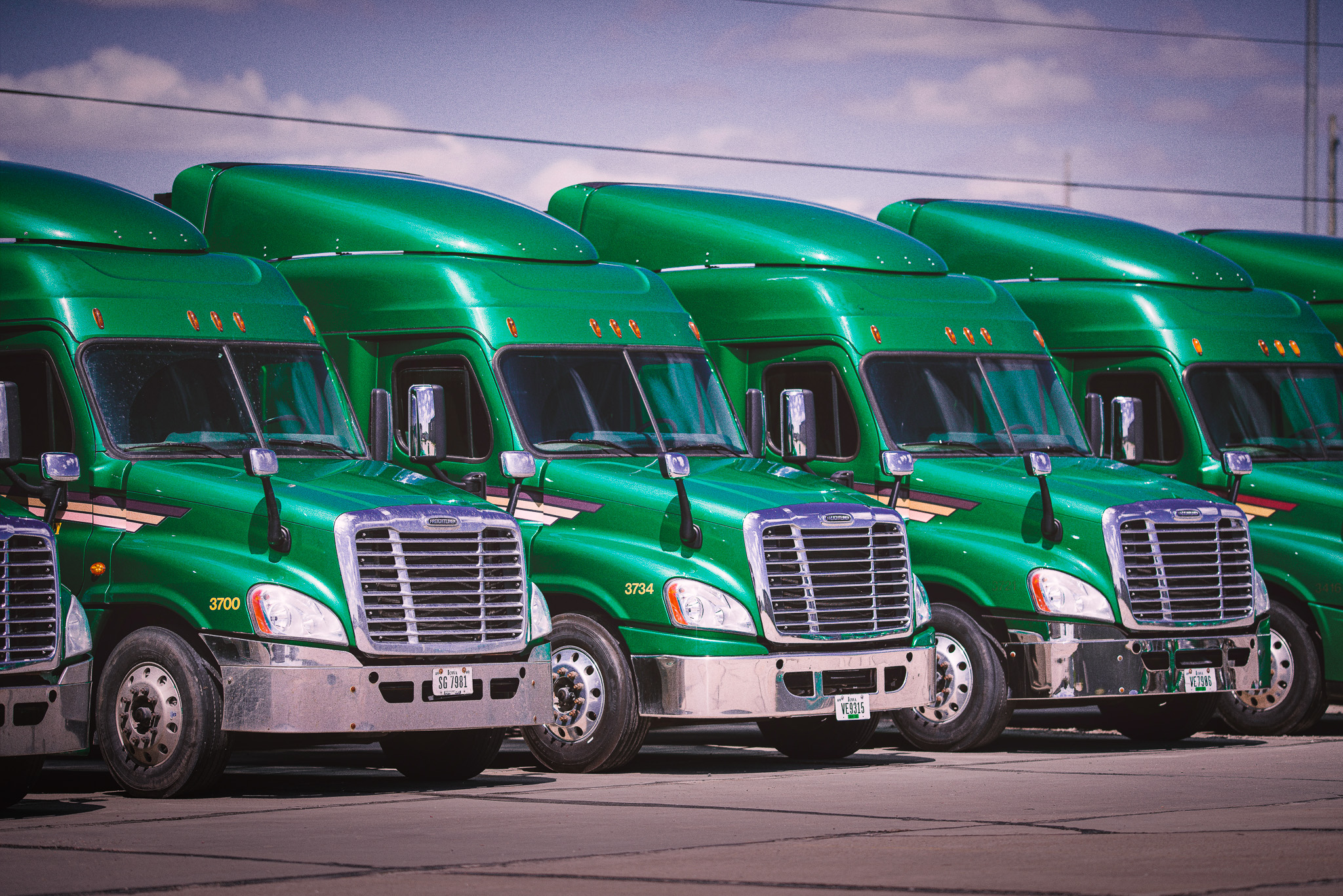
Coolant Considerations for Transportation Fleets
A transportation fleet doesn’t get to choose when its equipment has to work. Trucks leave early, run through traffic, climb grades, haul heavy loads, and often spend hours on the road before returning to the yard.
The cooling system has to handle all of that without much attention from the driver.
Most of the time, that’s exactly what you want. A well-maintained cooling system quietly manages engine heat while the vehicle does its job. Problems tend to get noticed only when the temperature starts climbing, coolant levels keep dropping, or a truck has to be pulled out of service.
For fleet managers, coolant deserves more attention before any of those things happen. The right fleet coolant, combined with consistent transportation maintenance, can help support the cooling system and protect the engine through long operating cycles.
Overview
- The right fleet coolant helps manage engine heat during demanding transportation operations.
- Coolant selection should follow the engine manufacturer’s requirements and operating conditions.
- Long-haul and stop-and-go fleets can place very different demands on cooling systems.
- Regular inspections can help identify leaks, contamination, and cooling system issues early.
- Proper coolant service supports engine protection and helps reduce avoidable downtime.
- Clear product identification and maintenance records make transportation maintenance easier to manage.
Transportation Fleets Put Cooling Systems Under Constant Demand
A highway tractor covering hundreds of miles doesn’t experience the same workload as a delivery truck making dozens of stops in one day. Both put demands on the cooling system, but the pattern is different.
Long-haul vehicles can spend extended periods at steady engine loads, while stop-and-go vehicles may experience repeated acceleration, idling, and changes in engine temperature. Heavy loads, steep grades, high ambient temperatures, and traffic can add even more heat.
That makes cooling system conditions particularly important.
A transportation fleet may also include vehicles of different ages and specifications. Some may have recently serviced cooling systems, while others have accumulated thousands of operating hours.
A good maintenance strategy accounts for those differences instead of treating every vehicle exactly the same.


Start Fleet Coolant Selection With the Engine
Choosing a fleet coolant should begin with the equipment manufacturer’s requirements, not the color of the fluid already sitting in the reservoir.
Different engines can have different coolant specifications, additive technologies, and service requirements. A product that works for one vehicle isn’t automatically appropriate for another.
Before adding or changing coolant, maintenance teams should verify:
- The manufacturer’s recommended coolant specification
- The required coolant technology
- Recommended service intervals
- Expected operating temperatures
- The coolant already installed in the system
- Compatibility before adding another formulation
This becomes even more important in mixed fleets. A maintenance shop may have trucks from several manufacturers, and keeping track of the correct coolant for each application can prevent unnecessary mistakes.
The goal isn’t to find one coolant that goes into everything. It’s to create a clear system for matching the right product to each vehicle.
Consider the Difference Between Long-Haul and Stop-and-Go Service
Operating conditions have a direct effect on how a cooling system is used.
A long-haul truck may spend hours on the highway with relatively consistent engine operation. A delivery vehicle, on the other hand, can go through repeated starts, stops, idling periods, and short trips throughout the day.
Both operating patterns can create challenges.
Transportation maintenance teams should pay attention to how individual vehicles are actually being used rather than relying only on mileage. Engine hours, load, route conditions, climate, and idle time can all provide useful context.
A practical fleet review can look at:
- Average daily mileage
- Engine operating hours
- Typical payload
- Amount of idling
- Route terrain
- Seasonal temperature conditions
These factors can help explain why two vehicles with similar mileage may have very different maintenance needs.
Coolant Condition Matters Over the Life of the Vehicle
Coolant doesn’t stay exactly the same throughout its service life.
Repeated heating and cooling cycles, operating hours, contamination, and the condition of the cooling system can all affect the fluid over time. That’s why checking coolant level alone isn’t enough.
During routine transportation maintenance, technicians should pay attention to the condition of the coolant and the surrounding system.
Signs worth investigating include:
- Repeatedly low coolant levels
- Visible leaks around hoses or connections
- Unusual deposits or contamination
- Changes in coolant appearance
- Engine temperatures running higher than normal
- Coolant that has reached its recommended service interval
A vehicle that repeatedly needs coolant added may have a leak or another cooling system problem. Simply topping off the reservoir can hide the symptom without fixing the cause.
For a fleet, identifying that issue during scheduled service is much easier than dealing with it after a truck has stopped on the road.
Choosing a Coolant That Fits Fleet Operations
The best coolant choice isn’t necessarily the product with the longest list of features. It needs to fit the equipment and the way the fleet operates.
For transportation applications, PRO X HD ELC 50/50 A/F RED is a premixed heavy-duty coolant formulated for applications including heavy-duty over-the-road trucks and medium-duty delivery trucks. This product provides protection against freezing, overheating, corrosion, and diesel liner pitting, with an extended-life formulation designed for demanding applications.
For fleets considering PRO X HD ELC 50/50 A/F RED, the product should still be matched to the applicable engine and coolant requirements rather than selected simply because it is convenient or premixed.
A clear product strategy can make service easier when technicians are working across a large fleet. The product label, equipment specification, and maintenance record should all point in the same direction.
Build Coolant Care Into Transportation Maintenance
Coolant shouldn’t be treated as something that gets checked only when a driver reports an overheating problem.
It belongs alongside the other routine tasks that keep commercial vehicles ready for service.
A practical transportation maintenance routine can include:
- Checking coolant level during scheduled inspections
- Inspecting hoses, clamps, and connections
- Keeping radiators and cooling packages free from excessive debris
- Reviewing coolant service history
- Checking for visible leaks or contamination
- Confirming the correct coolant is being used
- Investigating repeated changes in operating temperature
Record keeping matters, too. When maintenance teams know what coolant was installed and when the service was performed, the next technician has useful information to work from.

Protecting Engines Starts With Consistent Cooling System Care
Engine protection isn’t achieved by coolant alone. The radiator, water pump, thermostat, hoses, fan, and other components all have to work together. But the coolant remains a central part of that system.
A suitable fleet coolant helps the cooling system manage engine heat while providing the protection required by the application. Regular inspections help identify leaks and component problems before they become larger failures.
For transportation operators, that combination matters because an engine problem doesn’t just affect the vehicle. It can affect a route, a delivery schedule, a driver, and the fleet’s overall availability. Consistent maintenance helps reduce that uncertainty.
Transportation fleets operate on schedules, and unexpected cooling system problems can quickly interfere with those schedules.
The right fleet coolant is one part of preventing those problems. Proper coolant selection, regular inspections, accurate service records, and attention to operating conditions all contribute to a stronger maintenance program.
For maintenance teams, the process doesn’t have to be complicated. Start with the manufacturer’s requirements, understand how each vehicle is being used, keep the cooling system in good condition, and use a coolant that fits the application.
That’s the practical side of engine protection. It isn’t about waiting for a temperature warning. It’s about maintaining the cooling system well enough that the truck can keep doing its job when the next route starts.