
Choosing the Right PRO X Fluid for Mixed Equipment Fleets
A fleet rarely consists of machines that all do the same job.
A construction company might have excavators, loaders, pickups, and service trucks working on the same project. An agricultural operation could have tractors, utility vehicles, hydraulic equipment, and support machinery sharing the same maintenance yard. Add generators, trailers, or other industrial equipment, and the list grows quickly.
The maintenance challenge isn’t simply keeping all of those machines running. It’s knowing what each one needs.
Different engines, hydraulic systems, transmissions, and components can have different lubrication requirements. At the same time, maintaining a separate product for every piece of equipment can turn the shop into a storage area for half-used drums and containers.
This is where a more organized lubrication strategy makes sense.
PRO X offers products across engine oils, hydraulic fluids, transmission fluids, antifreeze, DEF, specialty oils, and other maintenance categories. The company positions its product line around professional applications across transportation, construction, agriculture, mining, industrial operations, and several other industries.
The goal isn’t to use one fluid everywhere. It’s to make it easier to choose the right fluid while creating a more consistent approach to fleet maintenance.
Why Mixed Equipment Makes Fluid Selection More Complicated
The biggest mistake a mixed fleet can make is treating lubrication as a one-product-fits-all decision.
A hydraulic excavator doesn’t have the same requirements as a diesel pickup. A transmission may need a completely different fluid from the engine sitting beside it. Even two machines that look similar can have different manufacturer specifications.
That’s why equipment manuals and product specifications still matter.
At the same time, fleet managers don’t want their maintenance program to become unnecessarily complicated. Keeping track of dozens of products creates its own problems, particularly when technicians have to identify the correct fluid before every service.
A practical approach is to group equipment according to its actual lubrication requirements and identify where multi-equipment fluids can be used without compromising manufacturer specifications.
For example:
- Engine oils can be organized by viscosity and required performance level.
- Hydraulic equipment can be matched with the appropriate hydraulic fluid grade.
- Automatic transmissions can be serviced with the specified transmission fluid.
- Cooling systems can be assigned the correct antifreeze or coolant.
- Specialized equipment can receive application-specific lubricants where required.
This approach creates opportunities to standardize products across compatible equipment where manufacturer specifications allow it, without ignoring the requirements of individual machines.
Where Fleet Standardization Actually Helps
Standardization sounds simple until you try to apply it across a real fleet.
The useful kind of standardization isn’t forcing every machine to use the same lubricant. It’s reducing unnecessary variation wherever the equipment allows it.
PRO X itself highlights this idea: its range is intended to let operations work under one brand and quality standard while still addressing the distinct requirements of different machines.
That can make a noticeable difference in a busy maintenance operation.
A standardized approach can mean:
- Fewer products for technicians to keep track of
- Simpler purchasing and inventory planning
- More consistent maintenance procedures
- Less confusion when servicing equipment
- Easier training for maintenance personnel
- Better visibility into lubricant usage
There is also a practical benefit that doesn’t always show up on a spreadsheet: technicians become more familiar with the products they use regularly.
That’s useful when equipment is being serviced under pressure, and there isn’t much time to second-guess a product choice.


Using PRO X Across Different Equipment Categories
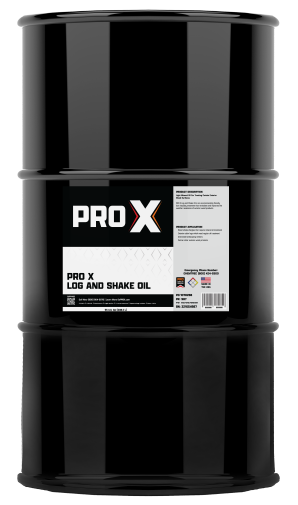
PRO X’s main product lineup covers several of the fluid categories a mixed equipment fleet is likely to need. The current product range includes hydraulic fluids such as PRO X Premium Hydraulic AW 32, AW 46, and AW 68; transmission products including PRO X Dex III/Merc ATF and PRO X Multivehicle ATF; heavy-duty and automotive engine oils; antifreeze and coolant products; DEF; and specialty oils.
That range matters because fleet maintenance rarely happens around one system.
A technician might service the engine of a work truck in the morning, check hydraulic equipment later in the day, and then prepare another machine for the next shift. Having a broad product family available from one supplier can simplify that process.
PRO X also states that its products are intended for demanding commercial environments and that its lineup includes engine oils, transmission fluids, hydraulic fluids, antifreeze/coolants, and DEF.
The important point is to match each product to the equipment and manufacturer’s requirements rather than choosing based on convenience alone.
The Case for Keeping the Maintenance Shop Organized
Walk into a poorly organized maintenance area, and the problem becomes obvious pretty quickly.
Containers are stacked wherever there is room. Different lubricants are stored next to each other. Labels may be difficult to read. Someone eventually asks which product belongs in a particular machine.
That kind of confusion can create avoidable mistakes.
A standardized lubrication program gives maintenance teams a chance to clean up that process. Products can be clearly labeled, assigned to specific equipment categories, and tracked as part of normal inventory control.
Available product support, packaging options, and technical guidance should be confirmed with PRO X based on the needs of the operation.
For larger operations, those details become increasingly important. Running out of a commonly used lubricant can delay maintenance just as easily as having too much of the wrong product sitting on a shelf.
The best inventory is not necessarily the biggest one.
It’s the one that contains what the fleet actually uses.
Choosing Industrial Lubricants Based on the Work
A machine’s environment can be just as important as its specifications.
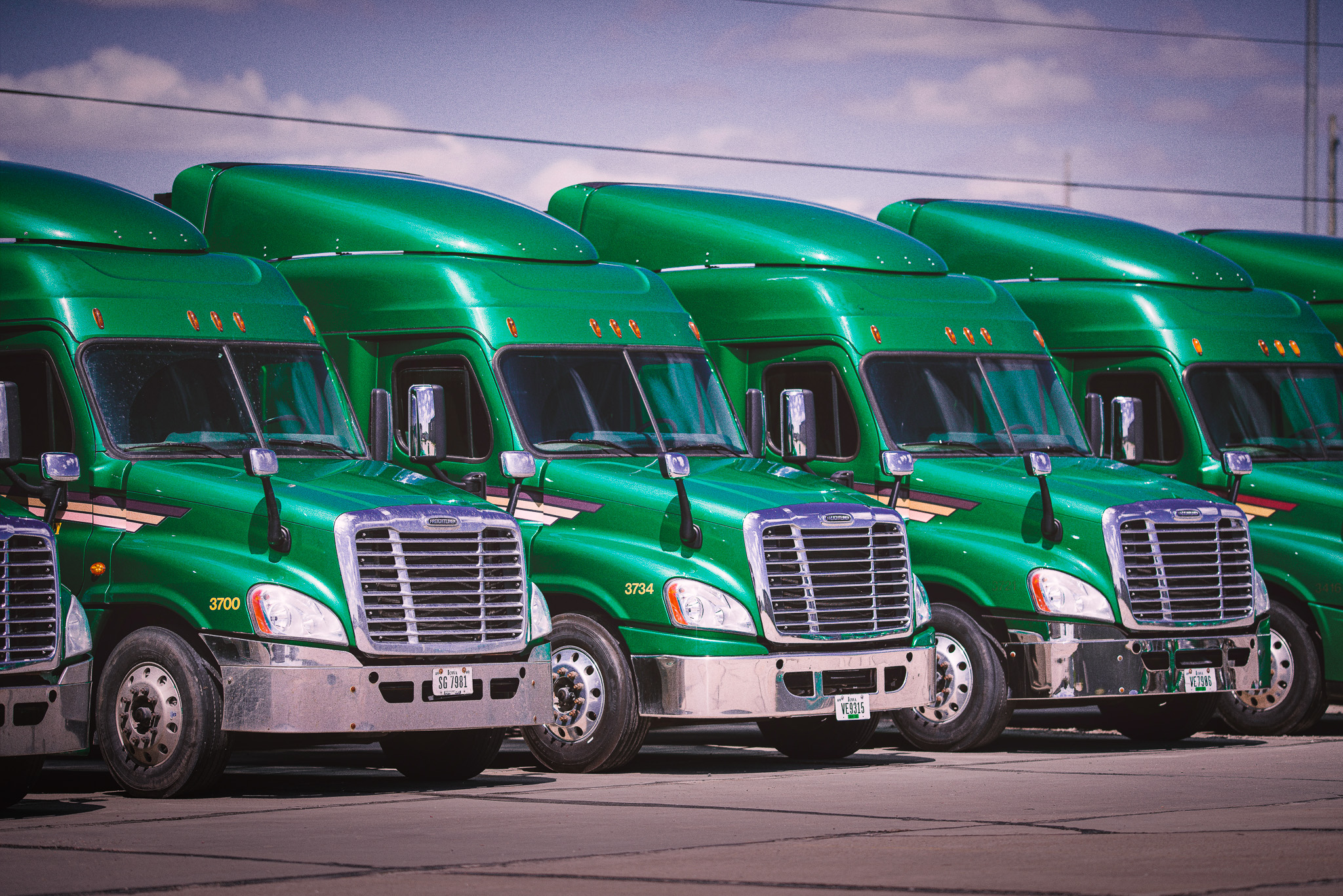
Equipment working around dust, high temperatures, heavy loads, water, or long operating cycles places different demands on industrial lubricants than equipment working in a clean, climate-controlled facility.
That’s why selecting industrial lubricants should begin with the job the equipment actually performs, rather than simply choosing the most convenient product on the shelf.
PRO X describes its lubricants as being developed for real-world operating conditions, including high-load and high-temperature applications, with attention to protection of bearings and moving components.
For fleet managers, that means looking beyond the label and asking practical questions:
- What kind of loads does the equipment handle?
- How many hours does it operate each day?
- What temperatures does it encounter?
- Is contamination a regular concern?
- What does the manufacturer specify?
- Can one approved product serve several compatible applications?
Those questions help prevent a common maintenance mistake: choosing a lubricant simply because it worked somewhere else.
Making the Right Product Choice Easier for Technicians
A good lubrication program should make a technician’s job easier, not harder.
Clear labeling, straightforward product identification, documented equipment requirements, and consistent maintenance procedures all reduce uncertainty. When a technician knows which product belongs in a particular machine, there’s less room for guesswork.
PRO X says its products are designed with practical field use in mind, including clear labeling and support for common equipment requirements. The company also offers technical guidance and training for crews using its products.
That support can be especially useful when a company is moving toward fleet standardization.
Fleet standardization works best when everyone understands the system. Purchasing knows what to order. Technicians know what to use. Supervisors know what should be in inventory. And equipment managers can track maintenance with fewer variables.
It’s a simple idea, but it can remove a lot of friction from day-to-day maintenance.

A More Practical Approach to Mixed Fleet Lubrication
Managing a mixed equipment fleet doesn’t mean finding one industrial lubricant that can do everything.
It means building a system where every machine receives the product it needs without creating unnecessary complexity for the people maintaining it.
PRO X’s broad lineup gives operations access to multiple lubricant and maintenance-fluid categories under one brand, including engine oils, hydraulic fluids, transmission fluids, coolants, DEF, and specialty products. Its stated focus on professional applications across transportation, construction, agriculture, mining, industrial operations, and other sectors makes the range relevant to fleets that work across different equipment categories.
The result can be a cleaner maintenance strategy: fewer unnecessary products, more consistent procedures, easier inventory planning, and better control over what goes into each machine.
For companies running equipment that has to work every day, that’s ultimately what good lubrication management is about.
Not having the most products.
Having the right PRO X products, organized around the equipment and the work.
